
How to identify neutral and live wires correctly:
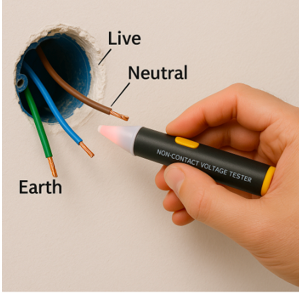
Understanding the Basics In any standard electrical system, you’ll typically encounter three main types of wires: In most residential systems, alternating current (AC) is used. Therefore, both live and neutral wires are active parts of the circuit, but only the live wire carries high voltage relative to the ground. Colour Codes for Wires The easiest […]
How to use a cable detector before drilling:
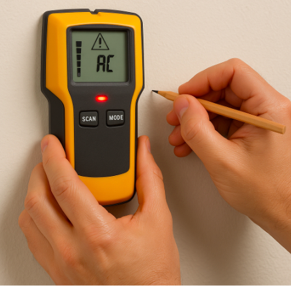
Understanding the Importance Before drilling, it’s essential to know what lies beneath the surface. Walls can conceal live electrical wires, water pipes, gas lines, and other hidden services. Accidentally drilling into any of these can lead to electric shock, flooding, gas leaks, or costly repairs. A cable detector—also known as a stud finder, wire detector, […]
How to wire a light switch safely and correctly?
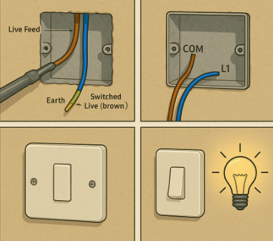
Wiring a light switch is a fundamental task in residential electrical work, but it must be done safely and correctly to avoid electric shocks, short circuits, or fire hazards. This guide explains how to wire a standard single-pole light switch using UK wiring practices, though the principles apply broadly. 1. Safety First Before any electrical […]
How to install a double socket from scratch:
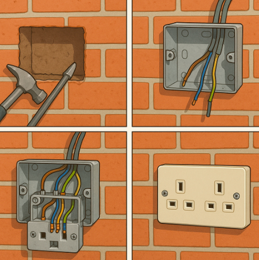
Tools and Materials Needed: Step 1: Planning and Safety Before beginning, switch off the main power supply at the consumer unit (fuse box). Use a voltage tester on nearby sockets to confirm there is no live power. Plan your socket’s location — it should be at least 450mm above the floor (in new builds, per […]
What is an ECS Card?
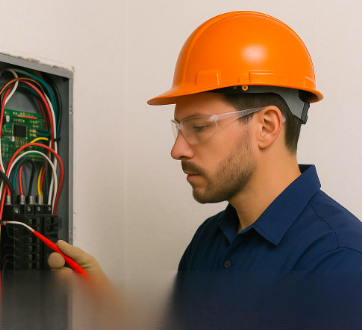
The ECS card (Electrotechnical Certification Scheme card) is an identification and competency card for electrotechnical workers in the UK. It proves that the holder has the necessary qualifications, skills, and health and safety knowledge to work on-site in the electrical industry. The card is managed by the Joint Industry Board (JIB) for England, Wales, and […]
Electrical qualifications for working in the UK
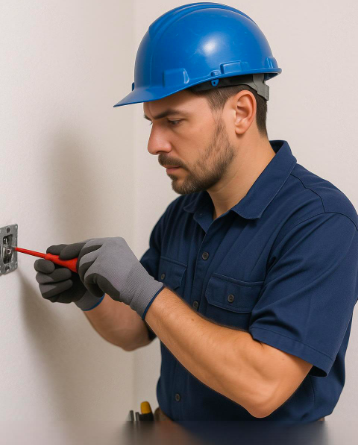
Working as an electrician in the UK requires official qualifications to ensure you can safely and competently carry out electrical work. The qualifications vary depending on whether you’re working in domestic, commercial, or industrial environments, and whether you’re employed, self-employed, or operating under a contractor scheme. Below is a step-by-step overview of the key qualifications […]